
Risk management is an essential integral part of any business. The risk control matrix is a helpful and most important tool for businesses to identify and assess risk. It reduces the risk of fraud. We all know that at some point in time, even the control fails the control matrix makes the failure visible. So, knowing about RCM is important.
What is a Risk Control Matrix?
A Risk Control Matrix (RCM) is a simple document or table. It helps organizations identify possible risks in a process and map them to the controls, prevent, detect, or reduce those risks.
In simple words:
- What could go wrong? (Risk)
- What is being done to prevent or detect it? (Control)
- Who is responsible for the control? (Control Owner)
- Is the control working properly? (Monitoring or Testing)
Simplify Your Compliance & Stay Audit-Ready
Help your team manage controls, risks, and audits with ease
What is the objective of the Risk Control Matrix?
The main objective of a risk control matrix is to systematically identify, assess, and manage organizational threats. It maps operational and financial risks against specific internal controls.
- Risk Mapping: It connects potential process-level risks with the specific control activities to reduce fraud.
- Gap and Overlap Identification: It mainly focuses on the area where controls are missing, and the repeated process can be consolidated.
- Audit Readiness: It provides a clear overview of internal and external auditors, SOX, and internal financial controls on how risks are governed.
- Accountability: It assigns specific control ownership and defines the frequency and type of testing required.
What are the key Components of a Risk Control Matrix?
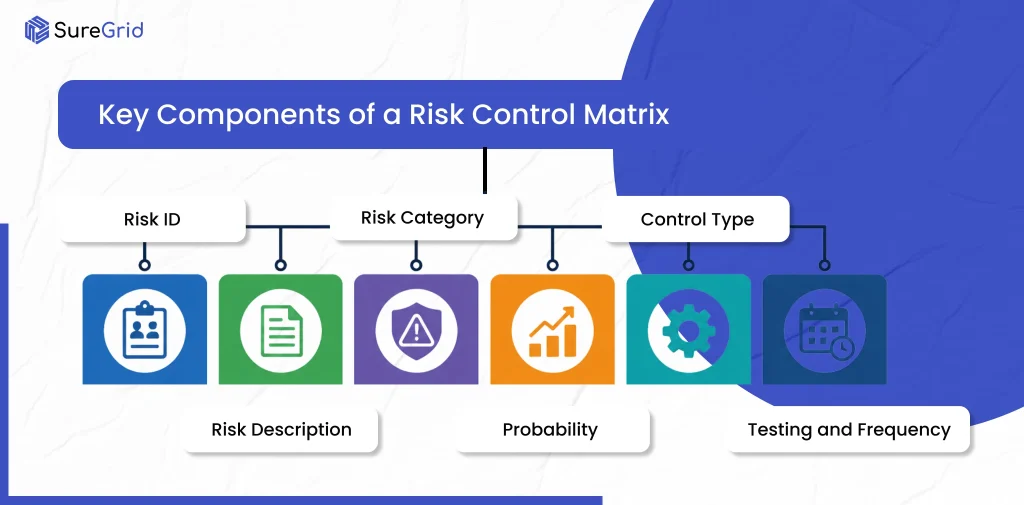
The risk control matrix has several key components:
- Risk ID: It is an alphanumeric code assigned to each risk entry. It is a permanent reference across audits, reports, and reviews.
- Risk Description: It is a brief description of what can go wrong, the triggering event, and the potential outcome.
- Risk Category: It is a classification label to group risks according to type. It enables reporting and pattern analysis.
- Probability: It is a score that tells about the probability of a risk and its consequences.
- Control Type: Describe what kind of control can resolve the risk and whether it can operate manually or automatically.
- Control Owner: The named individual or role responsible for executing, maintaining, and evidencing the control.
- Testing and Frequency: It defines how often the control is tested and verified. It also carries the document that contains the information of the conducted testing.
What are the Types of Risks Covered in an RCM?
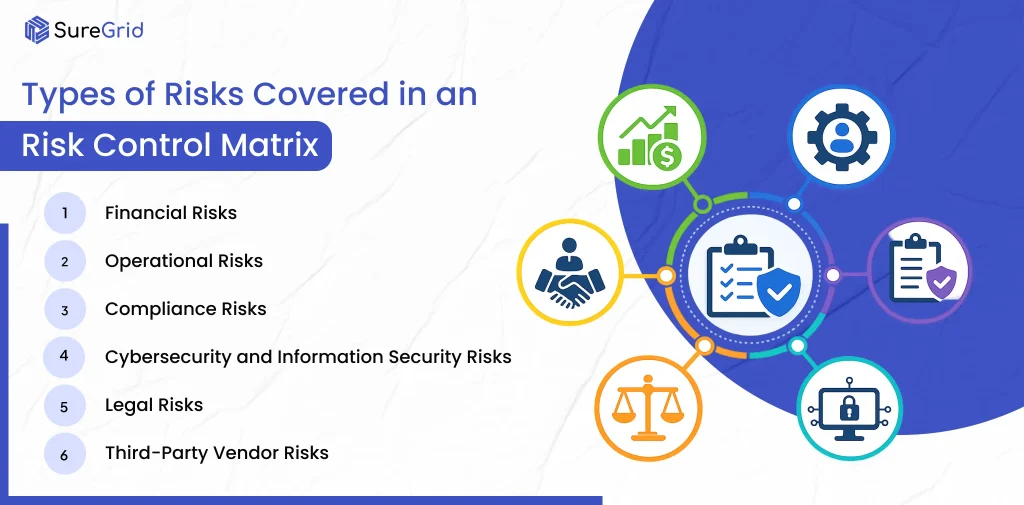
The major types of risk covered in RCM are:
- Financial Risks: Financial risks are raised when activities could lead to monetary losses, inaccurate financial reporting, or fraud.
- Operational Risks: Operational risks occur from the failure in internal processes, systems, or human actions that disrupt business operations.
- Compliance Risks: It occurs when an organization fails to comply with laws, regulations, industry standards, or internal policies.
- Strategic Risks: Strategic risks affect an organization’s ability to achieve its long term goals and business objectives.
- Cybersecurity and Information Security Risks: These risks involve threats to an organization’s digital assets, systems, and sensitive information.
- Reputational Risks: Reputational risks can damage a business’s brand image, customer trust, and market position.
- Legal Risks: Legal risks arise from lawsuits, contractual disputes, or non-compliance with legal obligations.
- Third-Party Vendor Risks: Organizations commonly depend on vendors, suppliers, and partners. It creates risks linked to external parties.
- Human Resource Risks: These risks relate to workforce management and employee activities.
- Business Continuity Risks: These risks threaten the organization’s ability to continue during disruptions.
How does a Risk Control Matrix Work?
Here is how RCM works:
Step 1: Identify Business Processes
In the first step, businesses need to list the key business processes within the organizations like procurement, payroll, financial reporting, customer onboarding, or inventory management.
Example: Accounts Payable
Step 2: Identify Risks
In the second step, find the risk that you can prevent the organization from achieving its objective.
Example Risks:
- Duplicate Payments
- Unauthorized vendor creation
- Incorrect invoice processing
- Fraudulent transactions
Step 3: Define Controls
After this, the business needs to document the controls implemented to address each identified risk.
Example:
- Three-way invoice matching
- Vendor approval workflow
- Segregation of duties
- Automated duplicate invoice checks
Step 4: Assign Control Ownership
Every control should have a designated owner responsible for performing and monitoring it.
Example: Control owner: Accounts Payable Manager
Step 5: Determine Control Type
Controls are typically classified into different categories:
- Preventive Controls
- Detective Controls
- Corrective Controls
Step 6: Assess Control Effectiveness
An organization can evaluate whether controls are properly designed and operating as intended. Questions often include:
- Is the control performed consistently
- Can it reduce the risk
- Is there evidence that shows that the control is working
Step 7: Monitor and Update the RCM
Businesses’ processes, regulations, and risks change over time. The RCM should be reviewed regularly to ensure risks and controls remain relevant.
Benefits of Using a Risk Control Matrix
RCM offers several benefits to the organization, if implemented properly:
- Helps in identifying the inefficiencies and Gaps: It maps the exact controls to specific risks. It helps you easily find the repetitive control activities or areas where critical risks lack proper safeguards.
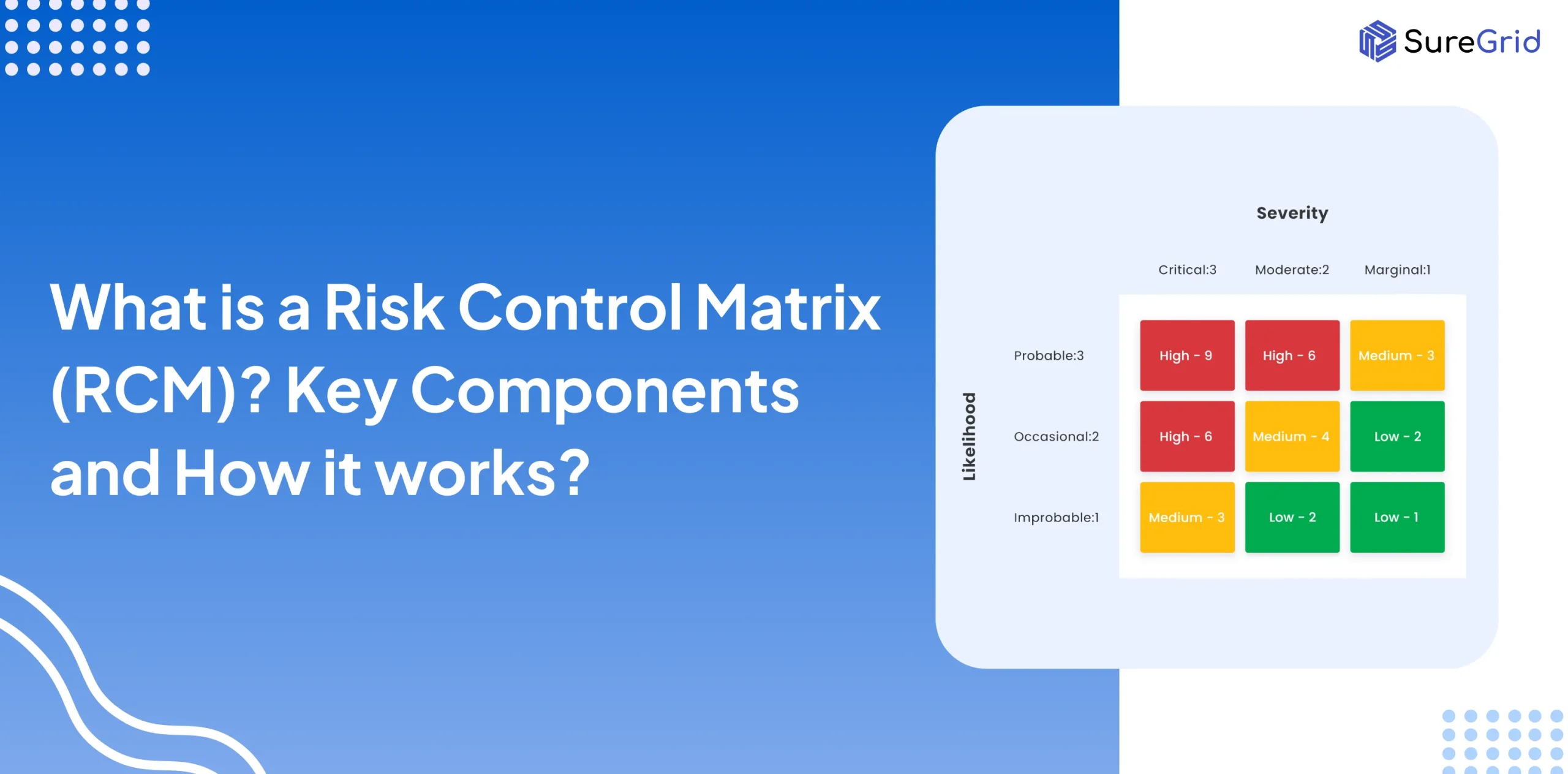
- Improves Risk Prioritization: It helps you visualize the probability of impact. It allows teams to focus time and resources on high-severity threats rather than minor ones.
- Enhance Accountability: It clarifies who is responsible for monitoring and executing each specific control activity.
- Support Decision Making: It replaces guesswork with a structured framework, enabling readers to make educated choices about whether to accept, reduce, or transfer risks.
What Common Challenges Occur While Using RCM
RCM is a valuable tool for an organization for managing and controlling; however, businesses still face issues like:
Becoming Outdated
Business processes, systems, and regulations change over time. If the RCM is not reviewed and updated regularly, it may not help identify the actual risks and controls.
Over Documentation without Any Action
There are many organization who spend time on creating detailed RCM. But they do not test controls or address identified gaps. An RCM is only effective when it is actively used and maintained.
Ownership Gaps
Controls need clear owners who are responsible for performing and monitoring. If responsibilities are unclear or employees change roles, important controls may be overlooked.
Inconsistent Risk Scoring
Risk Rating depends on factors such as likelihood and impact. Without a standardized scoring method, different teams take the same risk differently, which makes it difficult to set priorities and compare risk.
Conclusion
If you are an organization, you can take the Risk Control Matrix as a compliance checkbox. It is a proper document that shows how an organization takes internal control. If it is built correctly and regularly monitored. It helps managers, auditors, and employees clearly understand risks and the controls in one place to manage them.
FAQs
Ques: What are the 5 steps of RM?
Ans: The five steps are identify risks, assess risks, prioritize risks, implement controls, and monitor/review risks.
Ques: What is the 5×5 risk matrix?
Ans: It is a tool to evaluate risk based on five levels of likelihood and five levels of impact.
Ques: Who is responsible for maintaining a Risk Control Matrix?
Ans: Usually, process owners, risk managers, compliance teams, and internal auditors are responsible.
Ques: What is the difference between preventive and detective controls?
Ans: Preventive controls stop the risk from occurring. Detective controls identify the risk after the event occurs.
Ques: What is the purpose of the Risk Control Matrix?
Ans: Its main purpose is to systematically map an organization’s business processes, identify threats, and document specific controls.
Simplify Your Compliance & Stay Audit-Ready
Help your team manage controls, risks, and audits with ease