
Achieve SOC 2 compliance with Suregrid
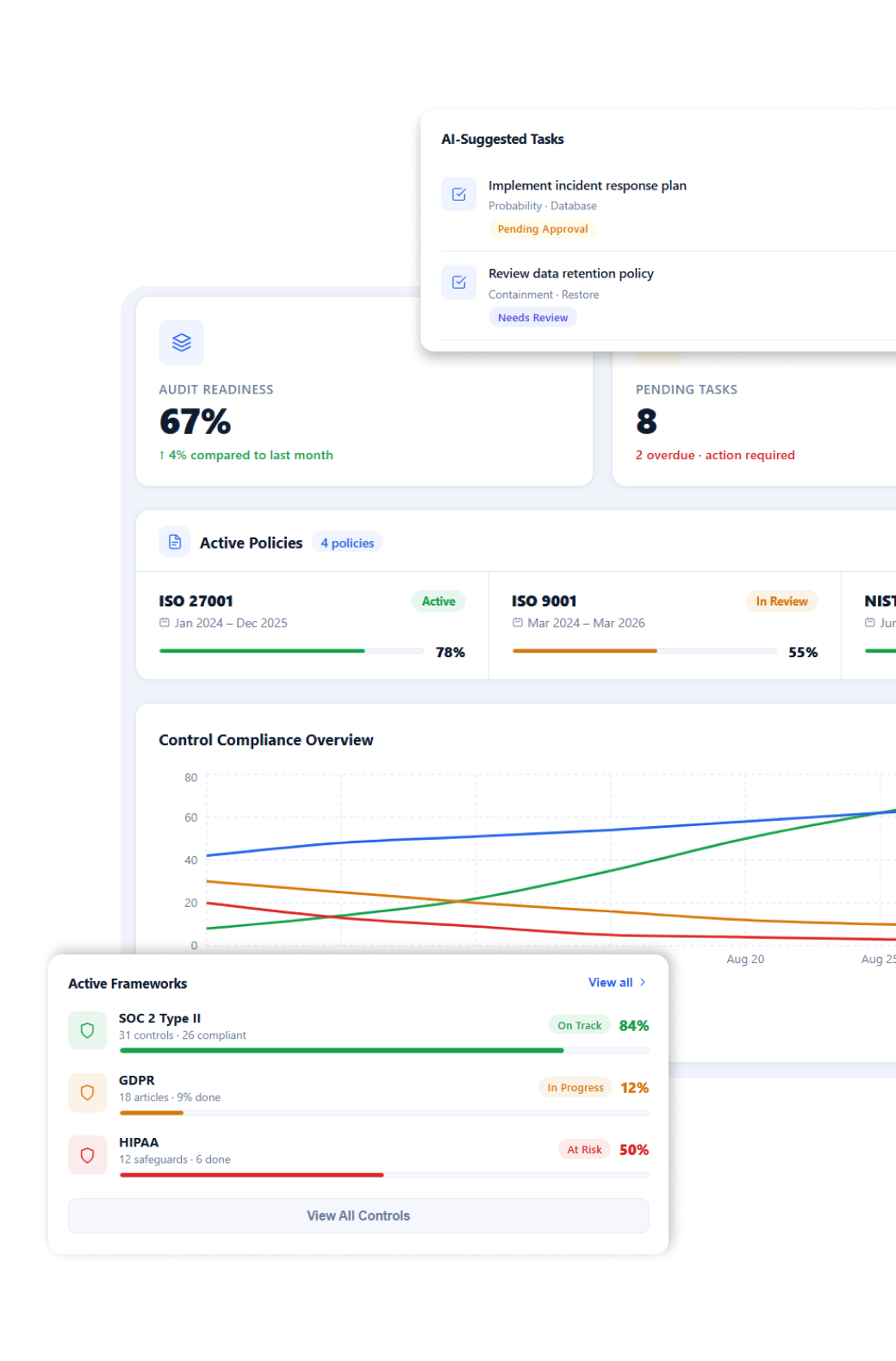
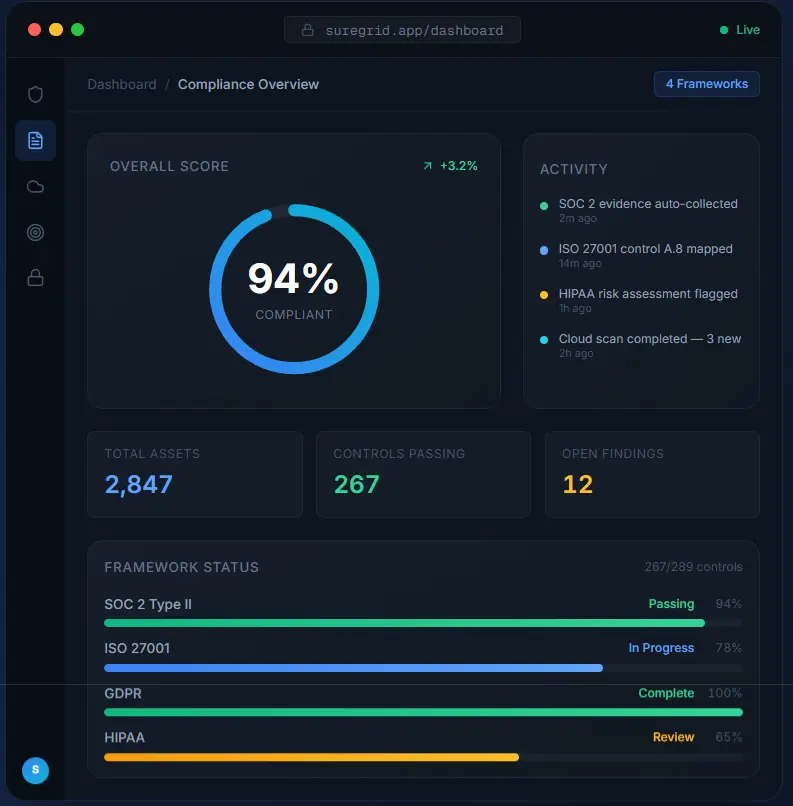
SOC 2 is the baseline trust signal for every B2B SaaS company. Suregrid automates the entire journey — from initial readiness to ongoing Type II compliance — so you can close deals faster and build customer trust.
Simplify SOC 2 compliance from start to finish

What SOC 2 compliance means
SOC 2 is a security and compliance framework designed for service organizations that handle customer data. It focuses on how systems are managed and protected based on five Trust Service Criteria—security, availability, processing integrity, confidentiality, and privacy—ensuring that customer information is handled responsibly.
Why SOC 2 matters for businesses
SOC 2 has become a baseline trust requirement for modern B2B companies, especially SaaS providers. It helps demonstrate to customers and partners that your organization follows strong security and operational practices, making it easier to close deals, pass vendor assessments, and build long-term trust.
SOC 2 Type I vs Type II
SOC 2 Type I evaluates whether your controls are designed correctly at a specific point in time, while Type II assesses how effectively those controls operate over a defined period, usually 3 to 12 months. Most companies aim for Type II as it provides stronger assurance of ongoing compliance.
What achieving SOC 2 involves
Achieving SOC 2 requires defining controls, implementing policies, collecting evidence, and undergoing an independent audit by a certified auditor. It is not a one-time task but an ongoing process that requires continuous monitoring, updates, and alignment with how your systems and teams evolve.
Achieve ISO 27001 compliance with SureGrid
What ISO 27001 is
ISO 27001 is an international standard for managing information security through a structured system called an Information Security Management System (ISMS). It provides a clear framework to identify, manage, and protect sensitive data across your organization. By following this standard, companies can ensure a consistent and systematic approach to security.
Why ISO 27001 matters
ISO 27001 is widely recognized across industries and countries, making it a strong trust signal for global businesses. It demonstrates that your organization follows established security practices to safeguard customer and business data. This not only builds credibility but also helps in meeting customer expectations and regulatory requirements.
Risk-based approach to security
ISO 27001 focuses on identifying and assessing risks to your systems, data, and operations. Instead of applying generic controls, it ensures that security measures are tailored to the specific risks your organization faces. This approach helps prioritize what matters most and makes security efforts more effective and practical.
Continuous improvement and monitoring
ISO 27001 is designed as an ongoing process rather than a one-time certification. It requires regular monitoring, internal audits, and updates to ensure controls remain effective over time. This continuous improvement model helps organizations adapt to new threats and maintain strong security as they grow.
Achieve GDPR compliance with SureGrid
What GDPR is
GDPR (General Data Protection Regulation) is a European Union law that governs how personal data of EU residents is collected, processed, and stored. It applies to any organization handling such data, regardless of where the company is based. The goal is to give individuals more control over their personal information.
Who needs to comply
GDPR applies to any business that processes personal data of people in the EU, including SaaS companies, e-commerce platforms, and global service providers. Both data controllers and data processors are responsible for compliance. This makes GDPR relevant for organizations worldwide, not just those based in Europe.
Key data protection principles
GDPR is built on core principles like data minimization, purpose limitation, transparency, and accountability. Organizations must collect only necessary data, use it for clear purposes, and protect it with appropriate safeguards. These principles ensure responsible and ethical handling of personal information.
Rights of individuals and enforcement
GDPR gives individuals strong rights over their data, including the right to access, correct, delete, and restrict its use. Organizations must respond to these requests and report breaches within strict timelines. Non-compliance can lead to significant fines, making ongoing adherence essential.
Achieve HIPAA compliance with SureGrid
What HIPAA is
HIPAA (Health Insurance Portability and Accountability Act) is a U.S. regulation designed to protect sensitive patient health information (PHI). It sets rules for how healthcare providers, insurers, and related organizations handle, store, and share this data. The goal is to ensure confidentiality, integrity, and security of patient information.
Who needs to comply
HIPAA applies to healthcare providers, health plans, and clearinghouses, as well as their business associates who handle PHI. Any organization that creates, processes, or stores patient data must follow HIPAA requirements. This includes many SaaS companies working with healthcare clients.
Key security and privacy rules
HIPAA is built around three main rules: the Privacy Rule, the Security Rule, and the Breach Notification Rule. These define how data should be protected, who can access it, and how incidents must be reported. Together, they ensure both technical safeguards and operational accountability.
Ongoing compliance and enforcement
HIPAA compliance is not a one-time effort but an ongoing responsibility. Organizations must regularly assess risks, update safeguards, and ensure employees follow proper data handling practices. Failure to comply can result in significant penalties, making continuous monitoring and improvement essential.
Achieve PCI DSS compliance with SureGrid
What is PCI DSS?
PCI DSS (Payment Card Industry Data Security Standard) is a global security standard designed to protect cardholder data. It sets requirements for how organizations handle, store, process, and transmit payment information. The goal is to ensure the confidentiality, integrity, and security of cardholder data while reducing the risk of fraud and breaches.
Why PCI DSS Matters?
PCI DSS helps organizations reduce the risk of data breaches, financial loss, and reputational damage. By enforcing strong security controls and best practices, it ensures that payment data is handled securely at every step. Compliance also builds trust with customers, partners, and payment providers—making secure transactions a core part of your business.
Strong protection of cardholder data
PCI DSS focuses on securing cardholder data at every stage whether it is stored, processed, or transmitted. It requires encryption, masking, and strict handling practices to prevent unauthorized access. This ensures sensitive payment information remains protected from breaches and misuse.
Strict access control and monitoring
PCI DSS enforces tight access controls so only authorized users can access payment data. It also requires continuous monitoring, logging, and testing of systems to detect and respond to threats. This helps organizations quickly identify vulnerabilities and maintain a secure payment environment over time.

Achieve NIST compliance with SureGrid
What NIST is ?
NIST (National Institute of Standards and Technology) provides widely adopted cybersecurity frameworks and guidelines used to manage and reduce security risk. Its frameworks help organizations understand their current security posture, define target states, and implement controls to protect systems and data effectively.
Why NIST matters ?
NIST helps organizations take a structured, risk-based approach to cybersecurity instead of relying on ad hoc security measures. It improves visibility into risks, strengthens defenses, and ensures consistent security practices across teams—making it easier to prevent, detect, and respond to threats.
Risk-based approach to security
NIST frameworks focus on identifying, assessing, and prioritizing risks across systems, data, and operations. Instead of applying generic controls, organizations can tailor security measures based on what matters most—making security efforts more effective and aligned with real-world threats.
Continuous monitoring and improvement
NIST promotes an ongoing security lifecycle that includes continuous monitoring, assessment, and improvement. By regularly evaluating controls and adapting to new threats, organizations can maintain a strong and evolving security posture as their systems and risks change.
Ready to simplify security and compliance?
Unify compliance, cloud risk, penetration testing, and questionnaire automation to reduce exposure, accelerate audits, and respond faster.
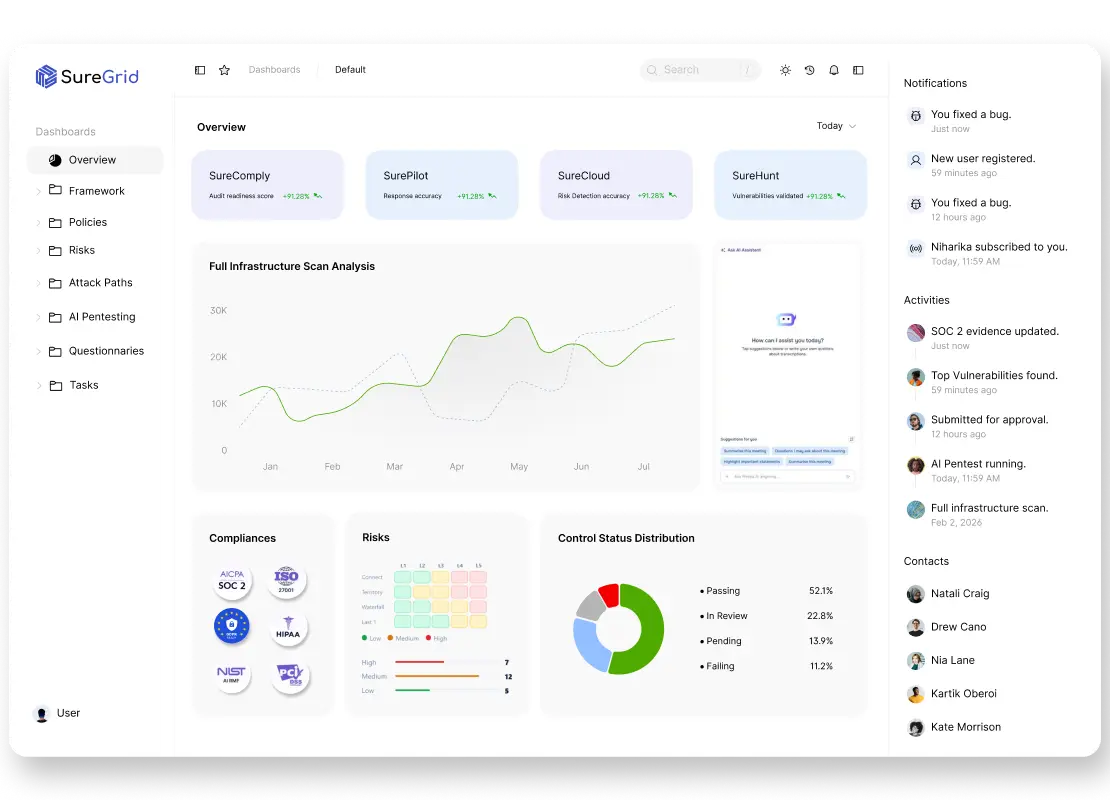
Start your SOC 2 journey today
Get audit-ready in weeks with automated evidence collection, pre-built control mappings, and a dedicated Auditor Portal.
Trusted by over 3,000+ companies of all sizes






Build with us
We’d love to show you how Suregrid can help your business. Fill out the form and we’ll be in touch within 24 hours
For all updates & much more, mail on [email protected]
We respect your privacy.