
An organization faces reputational damage and downfall due to data breaches and failure to comply. 80% of the reported being targets of payment fraud attempts. It highlights persistent control weakness. To avoid such events, organizations should follow the COSO Framework. Here in this blog, you will learn about the COSO framework, its full form, and the essential components.
What is the COSO Framework Full Form?
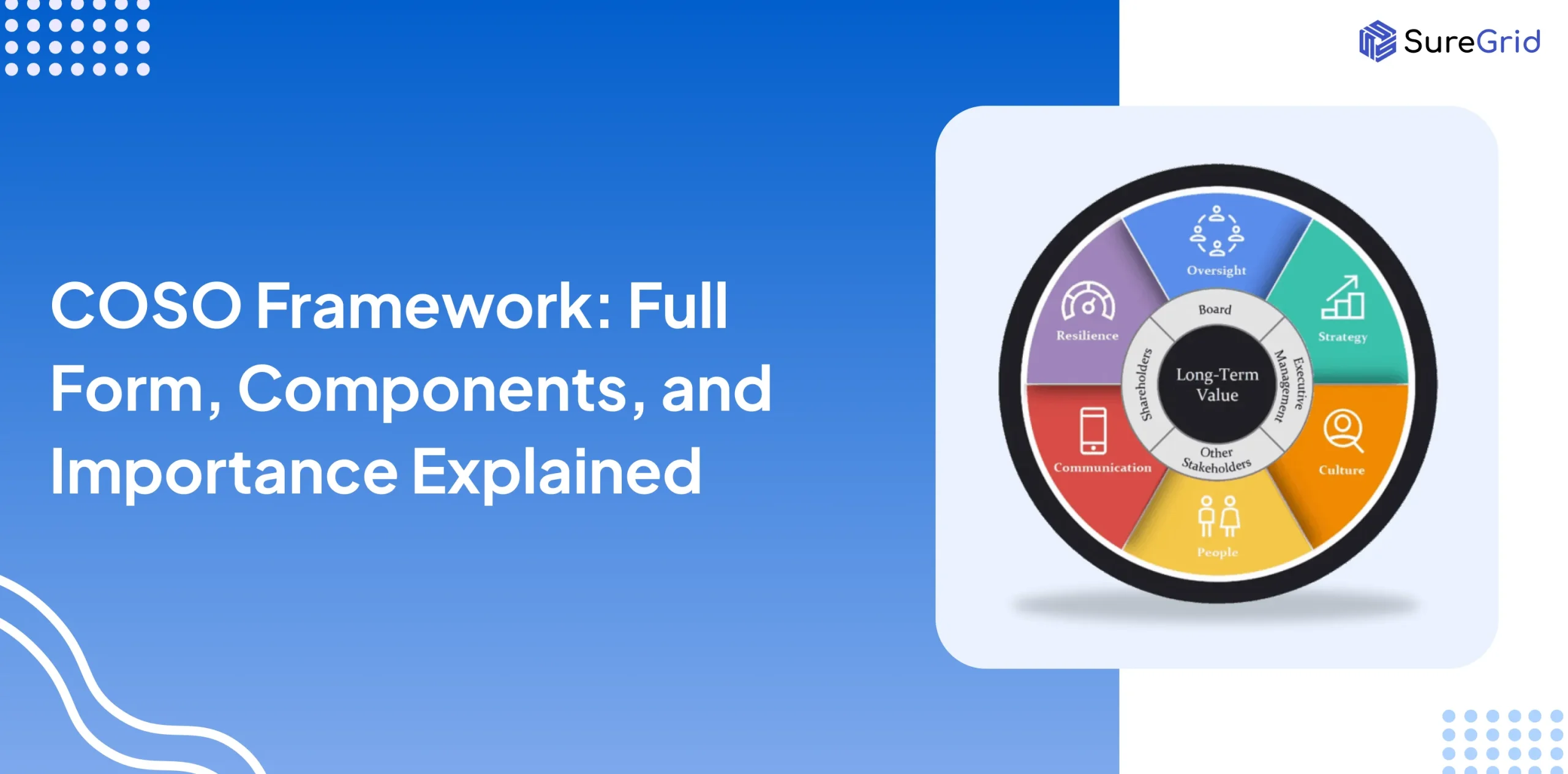
The full form of COSO Framework is the Committee of Sponsoring Organizations of the Tradeway Commission. It is a set of principles that helps an organization to make, implement, and evaluate effective internal controls. This framework assists the organization in achieving operational, reporting, and compliance objectives. It works around five components: control environment, risk assessment, control activities, information and communication, and monitoring.
Simplify Your Compliance & Stay Audit-Ready
Help your team manage controls, risks, and audits with ease
How COSO Framework Come into Existence?
From 1970 to 80, many companies were found to be involved in financial fraud and fake reporting. Due to this, people lose trust in company financial statements and business management systems.
To solve this issue, the National Commission on Fraudulent Financial Reporting was formed in 1985. This commission investigated the reason behind corporate fraud for two years and found that weak internal controls were the root cause.
After this, several organizations worked together to create the Committee of Sponsoring Organizations of the Tradeway Commission Framework. It was officially launched in 1992.
This framework provides various guidelines to help companies enhance their internal controls, manage risks, and maintain accurate financial reporting.
What is the Importance of the COSO Framework?
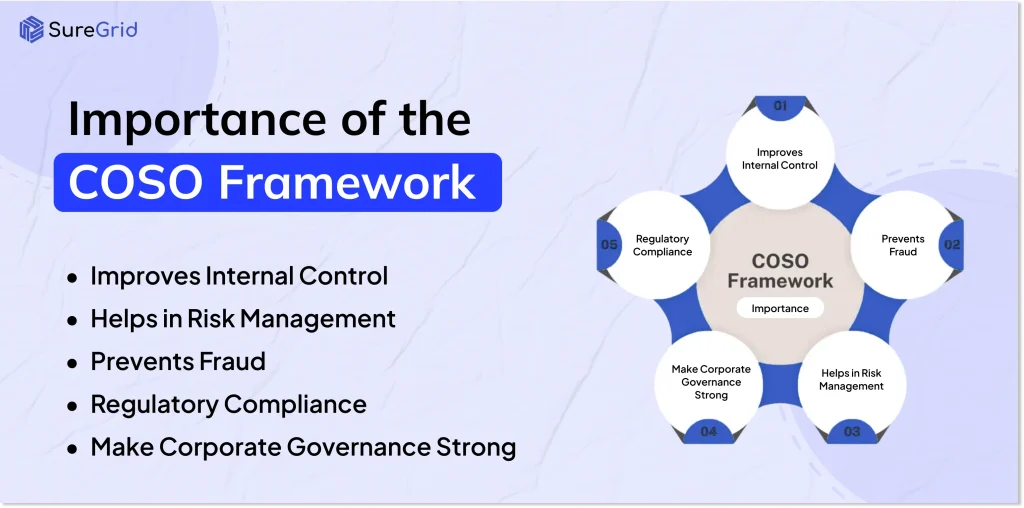
It is important for an organization for the following reasons:
- Improves Internal Control: It helps organizations use effective internal controls over financial and operational processes. It reduces errors, fraud, and mismanagement.
- Helps in Risk Management: It helps businesses to identify, evaluate, and manage risk before it becomes a major problem.
- Prevents Fraud: It implements proper monitoring and control activities. Organizations can identify and prevent fraudulent activities.
- Regulatory Compliance: The framework helps companies comply with laws, regulations, and standards. It is used in financial reporting requirements and audit regulations.
- Make Corporate Governance Strong: This framework defines clear responsibilities, accountability, and ethical practices within an organization.
What are the main components of the COSO Framework?
There are mainly 5 components of this framework:
- Control Environment: It represents the organization’s culture, ethical values, management style, and commitment to internal control. It forms the foundation of an effective control system.
- Risk Assessment: It focuses on identifying, analyzing, and evaluating potential risks.
- Control Activities: It is a set of policies, procedures, and actions used to minimise risks. It ensures that business operations are conducted properly and securely.
- Information and Communication: This process involves the identification, collection, and sharing of information. It ensures proper communication channels so that employees clearly understand their roles and responsibilities related to internal controls.
- Monitoring Activities: The process of evaluating the effectiveness and quality of internal controls over time via ongoing monitoring, separate evaluations, or a combination of both.
What are the Key Principles of the COSO Framework?
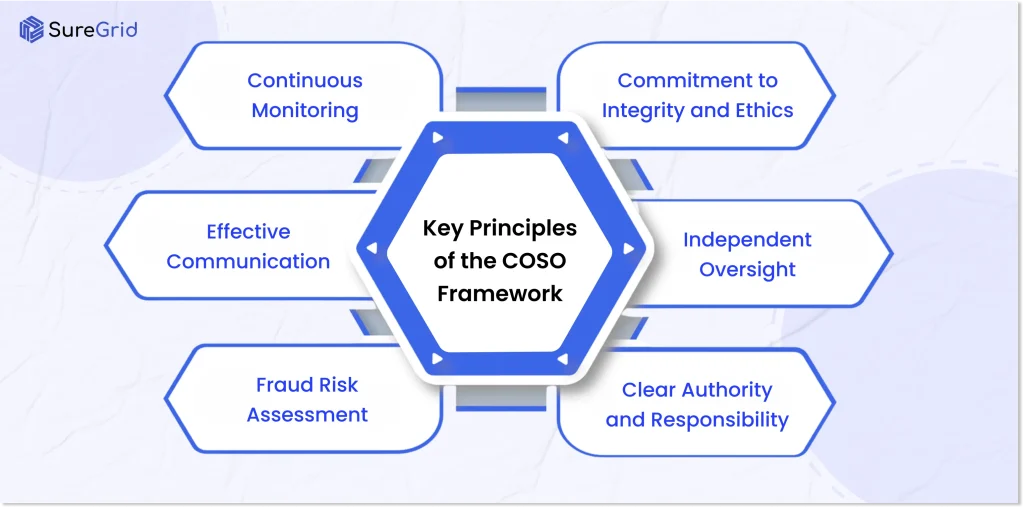
Each component of this Framework includes the following principles:
- Commitment to Integrity and Ethics: The organization should focus on honesty, ethical behavior, and strong moral values among employees and management.
- Independent Oversight: The board of directors or audit committee should independently monitor the organization’s internal controls and management activities.
- Clear Authority and Responsibility: Each employee should understand their roles, responsibilities, and reporting structure in the organization.
- Fraud Risk Assessment: The organization should identify and check possible fraud risks and take steps to prevent them.
- Effective Communication: Important information should be shared properly across all levels of the organization so employees can perform their duties.
- Continuous Monitoring: Internal control should be regularly reviewed and enhanced to confirm they continue to work effectively.
What are the steps to implement the COSO Framework?
Here’s how an organization makes use of the COSO Framework:
- Define Objectives: Determine the company’s objectives that could be to enhance internal controls, decrease risks, guarantee compliance, or improve financial reporting.
- Assess Current Controls: Check out the current processes, policies, and internal controls in order to determine strengths, weaknesses, and opportunities.
- Identify and Evaluate Risk: Companies should consider the possibility of threats that could affect the business’s operations or goals. These could be operational or financial risks, as well as compliance risks.
- Design Control Activities: It involves establishing methods to limit the risks identified. It involves approvals, segregation of tasks, access controls, and monitoring systems.
- Make Communication Channels: Communication channels make sure that accurate information is communicated effectively across departments, so that employees are aware of their roles and the management process.
- Implement the Monitoring Process: It constantly monitors and evaluates internal controls to make sure they’re working properly and to address any issues quickly.
- Provide Training and Awareness: The steps include education of employees and managers on COSO principles as well as internal controls and risk management methods.
- Review and Improve Regularly: Regularly update your controls and strategies for risk management to adjust to the changing business environment and the latest regulations.
What are the limitations of the COSO Framework?
Apart from the advantages, there are a few limitations of implementing this framework:
- Complex Implementation: The implementation of the COSO framework is very difficult for small organizations with limited expertise and resources.
- High Cost: A company needs to make heavy investments for developing, monitoring, and maintaining internal control.
- Time-consuming process: The proper implementation of frameworks involves several steps, including planning, documentation, training, and continuous evaluation.
- Need for Skilled Professionals: Organizations need trained professionals or consultants to apply the framework.
- Excessive Documentation: COSO often involves detailed policies, procedures, and reporting. It increases administrative workload.
Benefits of COSO Framework for Different Businesses
It is used by organizations of different industries:
- Banking and Finance: This framework is highly useful for banks and financial institutions. It helps in managing financial risk and fraud. Banks can improve internal auditing, transaction monitoring, and financial reporting accuracy.
- Healthcare: Healthcare businesses can use the framework to protect patient data, follow compliance, and improve operational efficiency. It protects sensitive patient records and reduces errors.
- IT and Cybersecurity Companies: The framework implementation helps in managing cybersecurity risks, securing digital assets, and maintaining strong internal controls.
Conclusion
COSO is essential for organizations to reduce risks, prevent fraud, and maintain compliance with laws and regulations. This framework helps businesses enhance financial reporting and improve risk management. It has 5 components and 17 principles that help organizations control internal records and prevent various issues.
FAQs
Ques: What are the 5 principles of COSO?
Ans: The five principles include control environment, risk assessment, control activities, information and communication, and monitoring activities.
Ques: What is COSO’s full form?
Ans: Full form of COSO Committee of Sponsoring Organizations of the Tradeway Commission.
Ques: What is the difference between COSO and ISO 31000?
Ans: COSO focuses on the internal controls and fraud prevention. ISO 3100 focus on broader enterprise risk management guidelines.
Ques: Is the COSO Framework Mandatory?
Ans: It is not legally mandatory, but organizations should implement it.
Ques: What is the COSO Framework Structure?
Ans: It is built on five components and 17 principles.
Simplify Your Compliance & Stay Audit-Ready
Help your team manage controls, risks, and audits with ease