

Every kind of business faces risks such as security breaches, financial loss, compliance problems, business decisions, or shifts in the marketplace that can affect how a company functions. It is difficult to avoid all risks, but an organisation can prepare for risks and reduce their impact. A risk management framework helps these companies to manage risk in a structured way.
In this blog, we’ll explore what RMF is, its key components, major frameworks, benefits, and how organisations can use it to manage risks effectively.
What is a Risk Management Framework?
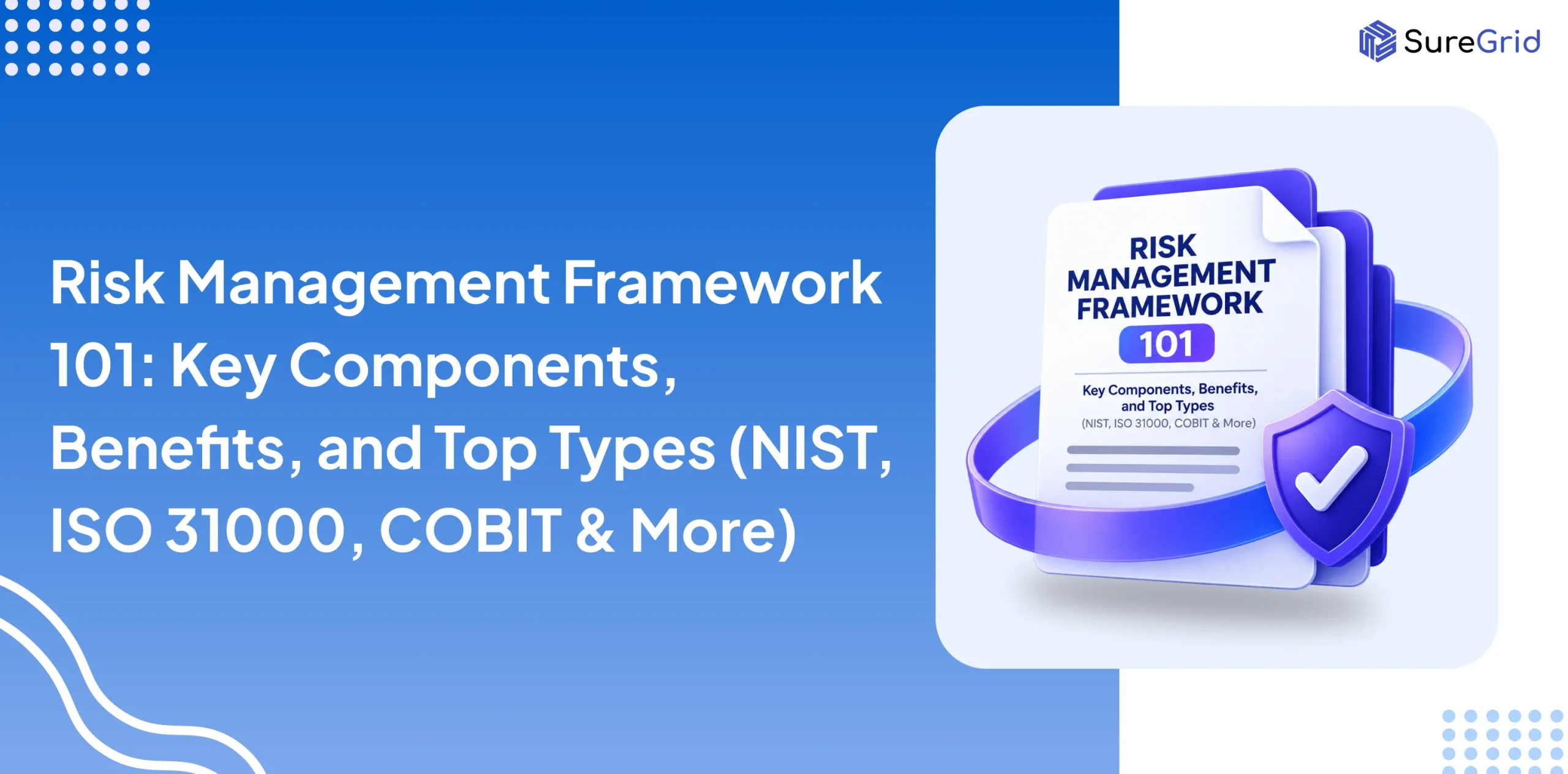
This Risk Management Framework (RMF) provides a structured way of managing risks. It helps organisations to find out what might go wrong, to assess the probability and impact of each risk, to decide how to deal with it and to keep it under review over time. The RMF emphasizes a proactive and consistent approach to risk management rather than waiting for problems to occur.
RMF also links risk management to business objectives. It includes various areas like operational, financial, security, strategic, and compliance risk. It helps teams to make better informed decisions by increasing clarity around their risks through establishment of processes, responsibilities, controls and reporting practices.
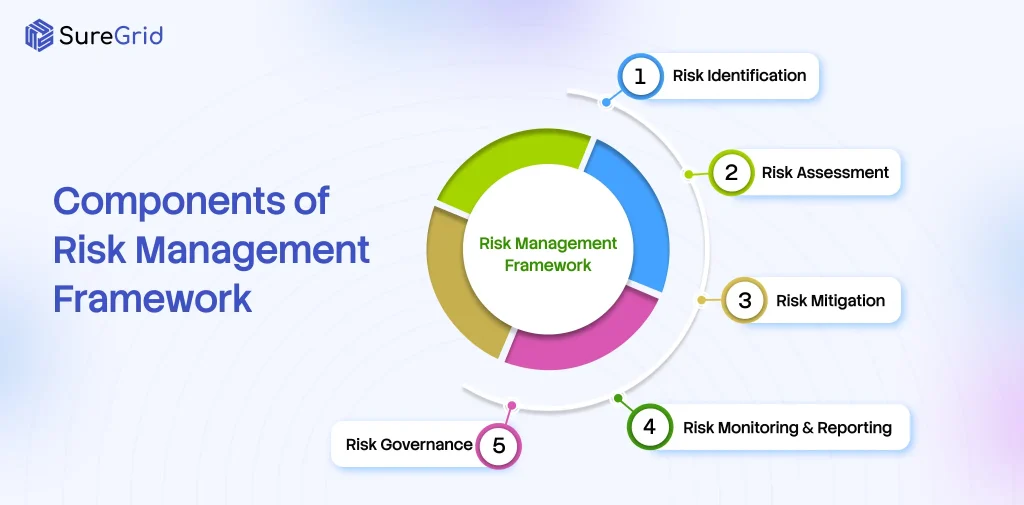
Components of Risk Management Framework
Main components of risk management are-
Risk Identification
The first step is to identify the risks that are most likely to affect the organisation. These risks come from cybersecurity threats, financial problems, operational issues, compliance requirements or changes in the business environment. Identifying risks on time helps organisations understand what could go wrong and prepare for it.
Risk Assessment
Organisations need to understand how serious the risk is after identifying it. Teams look at the possibilities of risks to happen and what impact it could have on the organisation. This helps them compare different risks and decide which ones need attention.
Risk Mitigation
After assessing the risks, organisations decide how to manage them. They may avoid the risk, reduce its impact, transfer it to another party, or accept it when the risk is within an acceptable level. The goal is to reduce the chances of harm and keep risks under control.
Risk Monitoring and Reporting
Risks can change over time, so organisations need to monitor them regularly. Teams should check existing risks, identify new risks, and track whether risk management measures are working. Important changes should also be reported to the right people so that they can take action when needed.
Risk Governance
Risk governance defines how risk management is handled across the organisation. It sets clear roles, responsibilities, policies, and decision-making processes. This helps employees understand who is responsible for each risk and ensures that risk management is handled consistently throughout the organisation.
How helpful are Risk Management Frameworks?
A Risk Management Framework helps organisations manage risks better. It facilitates smarter business decisions, helps teams concentrate on critical risks, and provides a clear picture of potential issues. The main benefits are:
Recognizes Dangers Early
RMF helps companies identify risks before they become bigger problems. This gives teams time to understand the risks and take the right steps to reduce them.
Assists in Setting Risk Priorities
Not all risks require the same amount of care. Teams can concentrate their time and resources where they are most required by using an RMF to identify which risks are more critical.
Improves Decision-Making
Organisations can make more informed decisions if they have a clear understanding of the risks. Teams can understand the possible impact of a decision and make choices that support business goals while keeping risks under control.
Creates Consistency
Teams can manage risks together with the help of an RMF. Every department can adhere to the same procedures and policies rather than managing risks in diverse ways.
Supports Compliance
Organisations can monitor their regulations, controls, and policies with the aid of an RMF. Meeting industry standards and remaining ready for audits may become simpler as a result.
Promotes Accountability
An RMF clarifies who is in charge of each risk. Teams that have well-defined roles and duties are aware of what has to be done and who should be in charge when an issue emerges.
Helps in organisational Adaptation
As the market, technology, and business evolve, so may the risks. Organisations can identify these shifts and modify their plans as necessary with the use of routine risk monitoring.
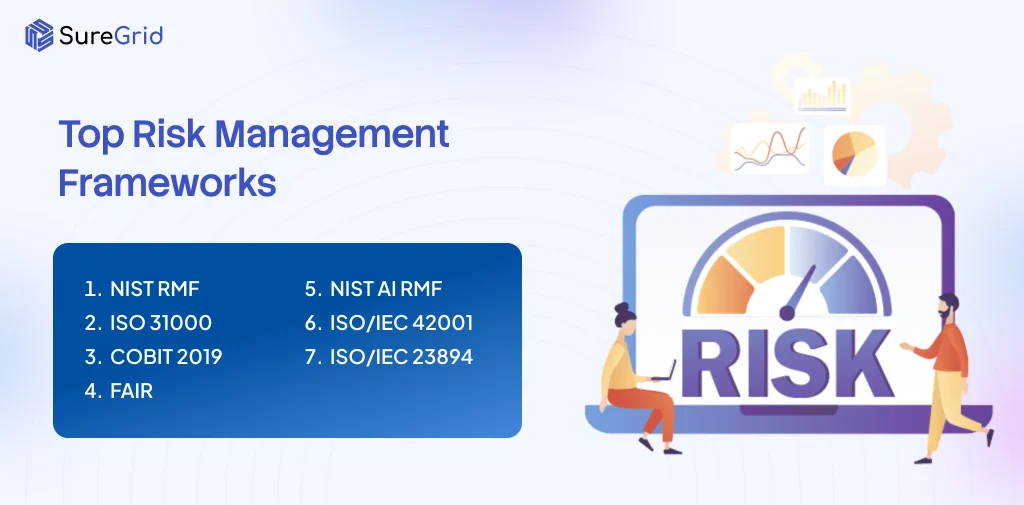
Top Risk Management Framework
Various frameworks are developed to help organisations to manage different types of risks.
NIST Risk Management Framework (RMF)
The NIST Risk Management Framework (RMF) was developed by the National Institute of Standards and Technology. It provides a structured process for managing security and privacy risks in information systems. The current core RMF publication is NIST SP 800-37 Rev.
ISO 31000
ISO 31000 is an international standard for risk management developed by the International organisation for Standardization. It provides general principles and guidelines that organisations can use to identify, assess, and manage different types of risks. It can be applied to organisations of different sizes and industries.
COBIT — 2019
COBIT, which stands for Control Objectives for Information and Related Technologies, focuses on IT governance and management. It helps organisations manage technology-related risks, establish controls, and align IT activities with business goals. The current major framework edition is COBIT 2019.
FAIR — Current Standard
FAIR or Factor Analysis of Information Risk, provides a method for understanding and measuring information and cybersecurity risk. It helps organisations analyze the likelihood and potential impact of risks, including their possible financial effects. The Open Group FAIR standard continues to be used for quantitative information-risk analysis.
NIST AI Risk Management Framework (AI RMF)
The NIST AI Risk Management Framework (AI RMF) was introduced to help organisations manage risks associated with artificial intelligence. It focuses on developing and using AI systems in a way that considers areas such as security, privacy, reliability, transparency, and accountability.
ISO/IEC 42001
ISO/IEC 42001 is an international standard for establishing and managing an AI management system. It helps organisations create processes for responsible AI governance and address risks associated with developing and using AI systems. It is particularly relevant as organisations increasingly adopt AI.
ISO/IEC 23894
ISO/IEC 23894 provides guidance specifically for managing risks related to artificial intelligence. It helps organisations identify and address AI-related risks throughout the development and use of AI systems.
Latest Developments in RMF
Risk management is changing because organisations face new technologies and threats. Some of the latest developments in RMF include:
- AI and Machine Learning: organisations are using AI and ML to identify risks, assess threats and detect problems faster.
- Cloud-Based Risk Management: More organisations are using cloud-based tools to manage risks, making it easier to scale and access risk information.
- Focus on Resilience: RMF is placing more focus on helping organisations prepare for changing cyber threats and other risks, so they can respond and recover more effectively.
Conclusion
A Risk Management Framework gives organisations a structured and clear way to understand and manage risks. RMF helps teams find risks before they become bigger problems. They can understand the possible impact of each risk and take action based on its importance.
RMF also helps create clear responsibilities. When teams know who is responsible for managing each risk, it becomes easier to take action. Frameworks such as NIST, ISO 31000, COBIT, FAIR, and AI RMF provide different approaches that organisations can choose based on their needs and risk environment. As technology and the business environment continue to change, risk management is becoming more important. Businesses can also choose an automated compliance platform to simplify risk management operations.
FAQs
Ques: What are the steps of RMF?
Ans: The main steps of an RMF are:
- Identify risks – Find possible risks that could affect the organisation.
- Assess risks – Understand how likely the risks are and their possible impact.
- Manage risks – Take steps to reduce, avoid, transfer, or accept risks.
- Monitor risks – Regularly review risks and check if controls are working.
- Report and review – Share important risk information and update the risk approach when needed.
Ques: What are the 7 types of risk management?
Ans: The seven common types of business risk are:
- Strategic Risk – Risks related to business decisions and plans.
- Operational Risk – Risks caused by problems in daily operations.
- Financial Risk – Risks that can cause financial loss.
- Compliance Risk – Risks of failing to follow laws or regulations.
- Cybersecurity Risk – Risks from cyberattacks and security threats.
- Reputational Risk – Risks that can damage an organisation’s reputation.
- Market Risk – Risks caused by changes in the market, customers, or competition.
Ques: What are the Risk Management Framework Certification?
Ans: There is no single certification that makes an organisation “RMF certified.” Organisations can follow frameworks such as NIST RMF or ISO 31000. Individuals can also take professional risk-management certifications or training related to specific frameworks.
Ques: What are the challenges in implementing a Risk Management Framework?
Ans: Common challenges include:
- Lack of employee awareness and training.
- Difficulty identifying all potential risks.
- Limited time, budget, or resources.
- Poor communication between teams.
- Difficulty keeping up with changing threats and regulations.
- Managing risks across different systems and departments.
- Maintaining regular monitoring and documentation.
Ques: Is NIST 800-53 a risk management framework?
Ans: No, NIST 800-53 is not the risk management framework itself; rather, it is a detailed catalog of security and privacy controls used to support risk management.
Simplify Your Compliance & Stay Audit-Ready
Help your team manage controls, risks, and audits with ease