
Healthcare organisations handle patient information daily, from medical records to personal details. This information must remain private and secure. HIPAA (Health Insurance Portability and Accountability Act) sets standards for protecting this information and ensures secure handling. Keeping patient data secure is a legal obligation. HIPAA sets rules for the same; following these requirements helps prevent data breaches, protects patient privacy, and keeps organizations on the right side of the law.
What is HIPAA compliance?
HIPAA compliance is about following the rules that protect patients’ health information and personal data. Healthcare organisations handle huge amount of data every single day from medical records to personal information.
Organisations need simple policies and security measures to protect these information. This can involve deciding who can have access to records, training employees, managing risks, and using secure systems.
HIPAA covers health care providers and certain businesses that work with them and have access to protected health information (PHI). Protected Health Information includes different types of patient information.
If any of the information is lost, stolen or accessed without permission, the Office for Civil Rights (OCR) may investigate the case. If a violation is found, the organization may have to pay a fine. The amount of the fine depends on how serious the violation is.
Who needs to comply with HIPAA?
HIPAA applies to organisations that handle protected health information (PHI) as part of their healthcare work. But who exactly needs to follow these rules? There are two main groups: covered entities and business associates.
- Covered entities include healthcare providers such as hospitals, doctors, clinics, dentists, and pharmacies. Health plans, such as health insurance companies and some government healthcare programs, also come under HIPAA. Healthcare clearinghouses are included too.
- Business associates are third-party organisations that provide services to healthcare organisations and may have access to PHI. This could be a billing company handling patient bills, an IT company managing systems, or a cloud provider storing health information. Accountants and law firms may also be business associates if they handle PHI.
Simplify Your Compliance & Stay Audit-Ready
Help your team manage controls, risks, and audits with ease
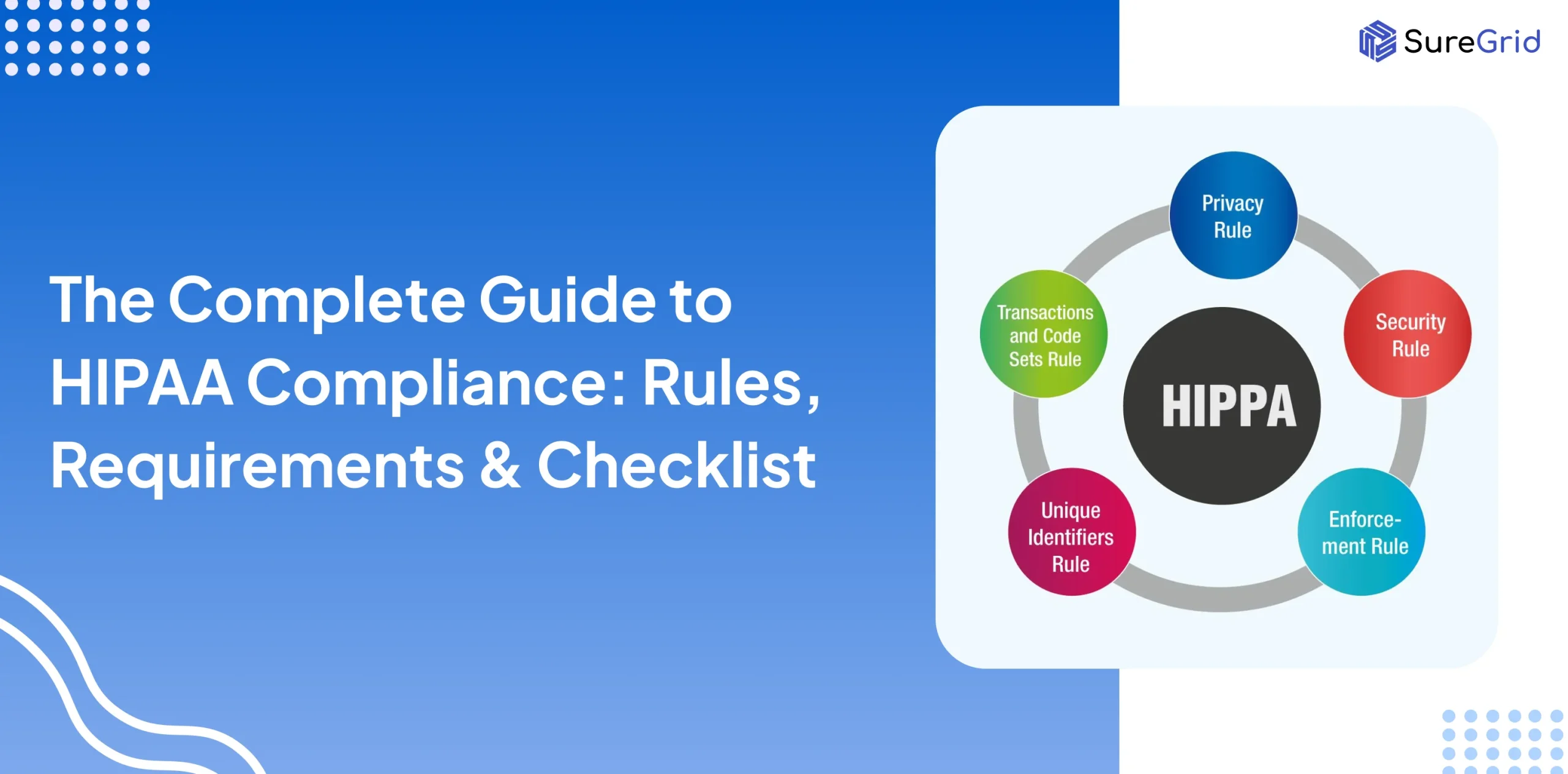
What are the HIPAA rules?
HIPAA has a few rules that Healthcare Organisations need to follow to keep patient information safe. Each rule focuses on a different part of protecting the health information.
- Privacy Rule: Controls how patient health information can be used and shared. It gives patients certain rights over their health information.
- Security Rule: Electronic health information (ePHI) is focused for protecting. Organisations need to use proper security measures to prevent unauthorized people from accessing or changing the data.
- Breach Notification Rule: Explains what organisations need to do when unsecured patient information is exposed or stolen. In certain cases, affected patients and the authorities must be notified.
- Enforcement Rule: Covers how HIPAA violations are investigated and how penalties may be given when organisations fail to follow the rules.
These rules work together to keep patient information private and secure. It’s not just about having rules on paper. Organisations also need to actually follow them in their day-to-day work.
What do you need for HIPAA compliance?
HIPAA compliance is not only about having a few rules but Organisations need to follow a few steps to keep patient information safe. It starts with understanding what information they handle and who can access it.
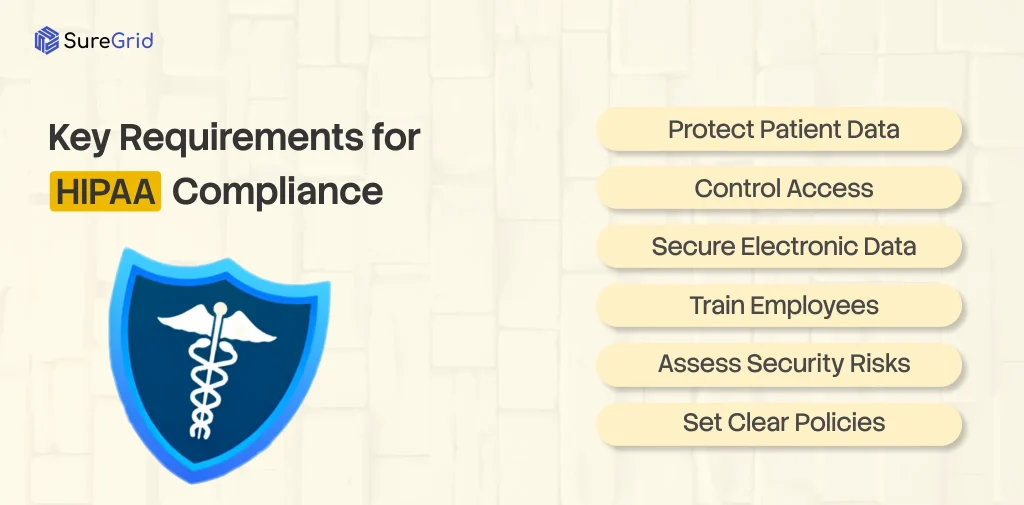
Basic HIPAA requirements are:
- Keep patient information private and safe.
- Only allow employees to access patient information.
- Use passwords, encryption, and other security tools to protect electronic data.
- Train employees on how to handle patient information safely.
- Check for security risks regularly and fix any problems.
- Create clear rules for using, storing, and sharing PHI.
- a plan for handling and reporting data breaches.
- Make sure third-party companies that handle PHI follow HIPAA rules.
- Use Business Associate Agreements (BAAs) when required.
The list may seem long, but the main idea is simple: keep patient information safe and only give access to the people who need it according to the HIPAA framework.
HIPAA Compliance Checklist
A good checklist helps you in quick pathway. It gives you a starting point and makes it easier to see what is already covered and what still needs attention.
- Know what patient information you handle
- Check whether HIPAA applies to your organisation
- Understand the HIPAA Privacy Rule
- Carry out regular risk assessments
- Put the right security safeguards in place
- Control who can access PHI
- Train employees regularly
- Have clear HIPAA policies and procedures
- Review your business associates
- Be ready for a data breach
- Follow breach notification requirements
- Protect physical devices and records
- Monitor and review your compliance
- Keep records of your compliance efforts
What to do if a Breach Occurs?
When a data breach happens, organisations should:
- Find out what happened and how the breach occurred.
- Identify what patient information was affected.
- Determine who needs to be informed.
- Make sure business associates report breaches to the healthcare organisation when required.
- Inform affected patients and the HHS Office for Civil Rights.
- Keep proper records of the breach and the steps taken.
- Meet the required breach notification timelines.
- Check whether any additional state laws apply.
- Follow a clear breach response plan to handle the situation quickly and properly.
What are the HIPAA Fines and Penalties?
HIPAA violations can lead to fines and other legal penalties. How serious the penalty is depends on what happened, whether the organisation knew about the problem and whether it tried to fix it.
Civil Penalties
Civil penalties are divided into four tiers:
- Tier 1: Unknowing
The organisation broke a HIPAA rule but did not know about it and could not reasonably have known. The fine can be about $145 to $73,011 per violation. - Tier 2: Reasonable Cause
The organisation knew, or should have known, about the violation but did not intentionally ignore the rule. The fine can be about $1,461 to $73,011 per violation. - Tier 3: Willful Neglect (Corrected)
The organisation seriously failed to follow a HIPAA rule but fixed the problem within the required time. The fine can be about $14,602 to $73,011 per violation. - Tier 4: Willful Neglect (Not Corrected)
The organisation seriously failed to follow a HIPAA rule and did not fix the problem. The fine can be about $73,011 to $2,190,294 per violation, depending on the applicable limits.
Criminal Penalties
Criminal penalties can apply when someone knowingly gets or shares patient health information without permission.
- Basic offense: Up to $50,000 in fines and 1 year in prison.
- Using false information: Up to $100,000 in fines and 5 years in prison.
- For personal gain or to cause harm: Up to $250,000 in fines and 10 years in prison.
HIPAA violations can also create other problems. An organisation may have to fix its security systems, change its policies, train employees, deal with investigations, and pay legal costs. It can also lose the trust of patients and damage its reputation.
How to achieve HIPAA Compliance?
Having the right policies, processes and security measures to keep patient health information safe helps in achieving HIPAA compliance. It’s not a one thing, Organisations need to keep checking their risks, training employees, monitoring their systems, and making changes when needed.
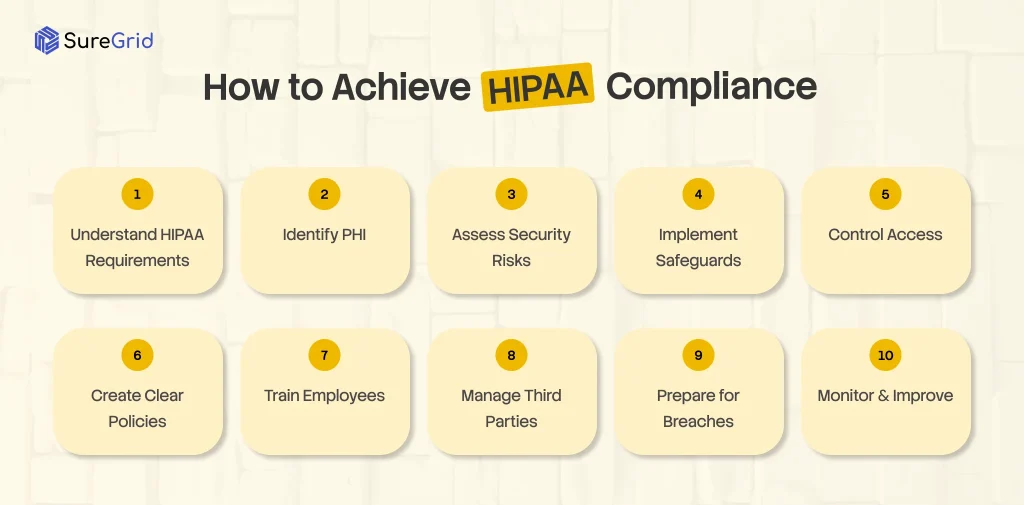
A simple approach is:
- First, understand which HIPAA rules apply to your organisation and what you need to do to follow them.
- Find out what patient information you collect, store, use, or share. Also, know where this information is kept. You can’t protect it properly if you don’t know where it is.
- Look for things that could put PHI at risk. This helps you find weak areas and understand what needs to be fixed.
- Use the right administrative, physical, and technical safeguards to keep patient information safe from unauthorised access or loss.
- Employees should only be able to access the information they need for their jobs. When an employee leaves the organisation or changes their role, their access should be changed or removed.
- Write down how your organisation will handle PHI, deal with security incidents, and manage employee responsibilities. Right policies make things easier for everyone.
- Employees handle patient information every day, so they need to know how to keep it safe. They should also know what to do if they notice a security or privacy issue.
- Check the third-party companies that handle PHI for your organisation. Where required, make sure you have a Business Associate Agreement (BAA) in place.
- Problems can happen even when you have security measures in place. Have a clear plan for reporting, investigating, and responding to security incidents or data breaches.
- HIPAA compliance needs regular attention. Review your policies, risk register, security measures, and employee practices from time to time. If you find a problem, fix it and keep improving.
In short, HIPAA compliance is about knowing where your PHI is, understanding the risks, protecting the information, training your employees, and regularly checking that everything is working properly.
HIPAA Compliance tools and solutions
HIPAA compliance involves a lot of tasks, especially when an organisation is managing risks, policies, employee training, audits, and security controls manually. Compliance tools like SureComply can help bring these activities together and make them easier to track.
SureComply helps organisations automate compliance tasks and continuously monitor for risks, reducing the need for manual tracking. It brings compliance activities onto a single platform. This can make it easier for teams to stay organised and maintain compliance over time.
Conclusion
HIPAA compliance is about following a set of rules. It is about making sure patient health information is handled safely and responsibly at every stage. Organisations need to understand what information they have, who can access it, what risks exist, and how to respond when something goes wrong. It is a continuous process, not a one-time task. The right compliance tools can also make this process easier by bringing important activities together and reducing manual work.
Most importantly, strong compliance practices help build trust with patients and show that their sensitive health information is being treated with the care and protection it deserves.
FAQs
Ques: Who must comply with HIPAA?
Ans: Under HIPAA, compliance is mandatory for covered entities and their third party business associates that handle protected health information.
Ques: What is HIPAA compliance in India?
Ans: Indian companies handling health data for U.S. clients must comply with HIPAA as Business Associates.
Ques: What are the important rules of HIPAA?
Ans: There are three main rules of HIPAA: the Privacy Rule, the Security Rule, and the Breach Notification Rule.
Ques: What is the main purpose of HIPAA?
Ans: The main purpose of HIPAA is to protect the privacy and security of individuals’ personal health information while ensuring people can keep their health insurance when changing or losing jobs.
Ques: What is an example of HIPAA compliance?
Ans: An example of HIPAA compliance is a healthcare worker locking their computer screen every time they step away from their desk to prevent unauthorized people from seeing patient health information.
Simplify Your Compliance & Stay Audit-Ready
Help your team manage controls, risks, and audits with ease